
Scoliosis Physiotherapy for Children
A Parents Guide
What is Scoliosis?
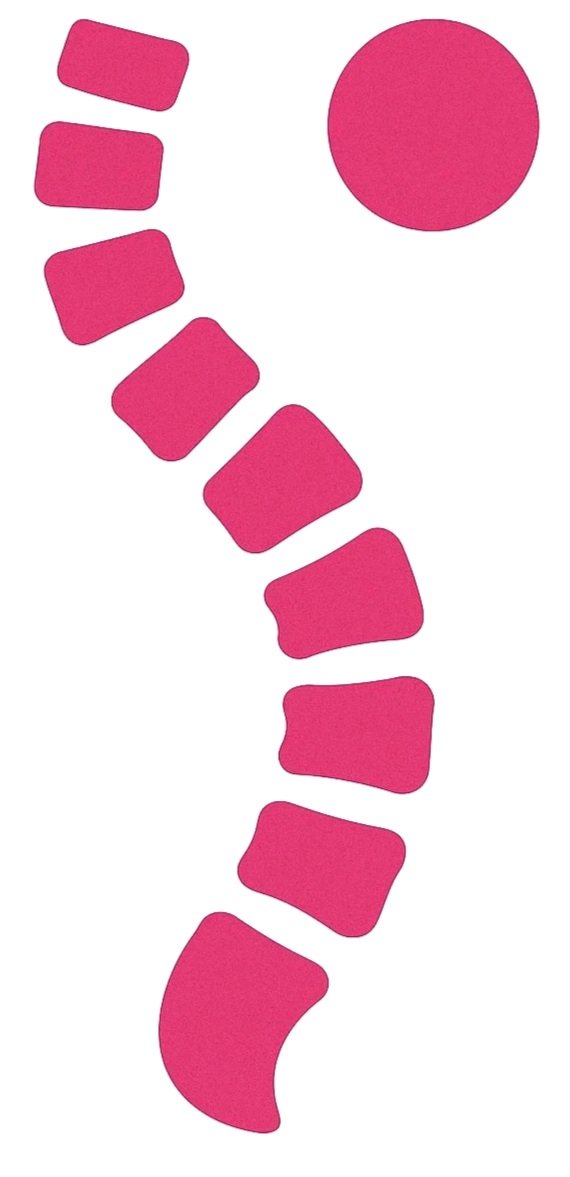
Scoliosis is a condition where the spine curves sideways by 10 degrees or more, often during growth spurts in childhood or adolescence. This curve may also involve rotation of the vertebrae, which can affect posture and in more severe cases, reduce chest expansion and lung capacity.
Types of scoliosis include:
Idiopathic scoliosis: The most common type, usually appearing in children or teens without a clear cause.
Neuromuscular scoliosis: Linked to conditions like cerebral palsy or muscular dystrophy.
Congenital scoliosis: Caused by spinal bones developing abnormally before birth.
Early detection is key because scoliosis can progress quickly during growth.
Signs of Scoliosis in Children
Parents often notice:
Uneven shoulders or hips
Asymmetry in the ribcage when bending forward
Waistline asymmetry
A visible trunk shift
Tip: Check your child’s posture when they stand naturally and when they bend forward. If you notice asymmetry, book an assessment with a physiotherapist or doctor.
Screening tools:
Adams forward-bend test: A simple test to spot ribcage asymmetry or spinal rotation.
Scoliometer: Measures trunk rotation.
X-rays: Confirm diagnosis and measure the curve (Cobb angle).
Why Early Detection Matters
Finding scoliosis early is crucial for children and adolescents who are still growing. During growth, the spine can change quickly, and early detection gives families access to treatment options that are only effective while growth is ongoing. This includes conservative interventions such as bracing.
Physiotherapists play a key role in this process. They can:
Spot subtle signs of scoliosis during routine checks
Refer for an EOS X-ray to confirm the diagnosis
Help families navigate the clinical pathway, including connecting you with an orthopaedic specialist
Provide education and exercises to support posture and confidence while waiting for specialist care
Early detection doesn’t just improve treatment choices; it reduces stress for families by ensuring the right steps are taken quickly.
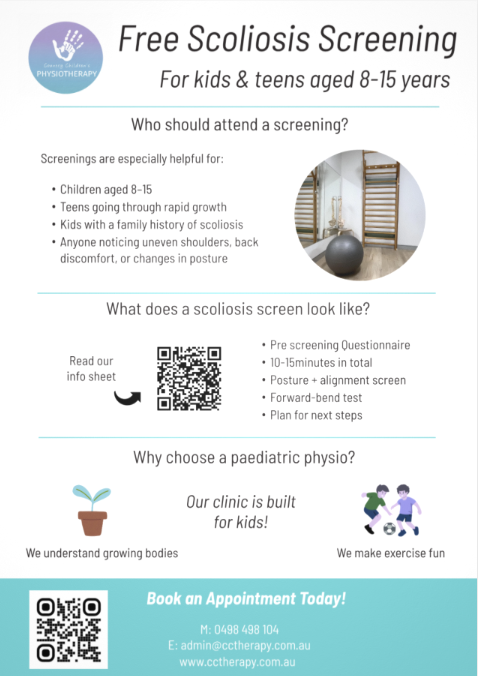
Contact us for information about our FREE scoliosis screening at our Canberra clinic, or book online. If you’d like to know what to expect on the day — including what to wear and what to bring — you can read our Scoliosis Screening Guide
Our Treatment Approach to Scoliosis in Children and Teens
We have experience supporting children with both idiopathic scoliosis and neuromuscular scoliosis.
For idiopathic scoliosis, our physiotherapists can:
Assess: Posture, flexibility, strength, pain, and daily activities
Set Goals To:
Teach 3D posture correction and active alignment strategies based on the BSPTS Rigo Concept. This is a type of PSSE, (Physiotherapeutic Scoliosis Specific Exercise) similar to Schroth.
Strengthen core muscles and improve overall symmetry
Use techniques to manage pain (if present) and improve comfort
Educate families on posture awareness and integration into daily life
Work alongside bracing: bracing is prescribed and managed by an orthopaedic specialist, who determines if and when it is needed based on your child’s EOS X-ray results and growth stage. Physiotherapy complements bracing by helping your child develop active postural control and maintain strength and flexibility. This support is especially important during brace wear and when transitioning out of the brace (weaning phase).
Tip: If your child is starting to wean out of their brace it is a great time to get in contact with a PSSE trained physiotherapist to support that transition.
For neuromuscular scoliosis, our physiotherapists can:
Assess: Posture, flexibility, strength, and functional positioning
Provide Options Such As:
Postural support garments to assist alignment
Targeted exercise programs to maintain mobility and strength
Reviewing seating, standing, and sleeping positions for optimal support
Collaborate: Work alongside Sydney hospital clinics and provide clinical monitoring in between those specialist appointments.
What is the BSPTS Rigo Concept?
The BSPTS Rigo Concept (Barcelona Scoliosis Physical Therapy School) is an evidence-based approach to managing idiopathic scoliosis through Physiotherapeutic Scoliosis-Specific Exercises (PSSE). Developed by Dr Manuel Rigo, this method builds upon the original Schroth principles and focuses on three-dimensional spinal correction, postural stabilisation, and breathing techniques to improve trunk symmetry and spinal alignment. At Country Children’s Physiotherapy, Patricia is a BSPTS-trained physiotherapist (Level 2) and provides tailored programmes for children and adolescents, teaching active self-correction strategies that can be integrated into everyday life.
What Does an Initial Scoliosis Appointment look like at Country Children’s Physiotherapy?
Your child’s first scoliosis appointment is designed to be thorough, supportive, and reassuring.
Here’s what to expect:
Detailed History: We’ll discuss your child’s growth, posture changes, family history, and any symptoms like pain or fatigue.
Posture & Movement Assessment: Our physiotherapists check for signs such as shoulder or hip asymmetry, ribcage differences when bending forward, and trunk alignment.
Functional Screening: We assess flexibility, strength, and daily activities to understand how scoliosis affects your child’s life.
Education: We explain what scoliosis is, what the next steps might be, and answer all your questions.
Referral Support: If needed, we’ll help arrange an EOS X-ray - a low-dose imaging system that provides a full-body view in standing position - and connect you with an orthopaedic specialist for further evaluation.
Initial Exercise Advice: Depending on your child’s presentation we may not provide exercises on the first visit. We find most kids and teens need a separate session to practice the PSSE exercises with the physiotherapist to gain confidence with technique before completing at home.
Our goal is to make sure you leave the appointment feeling informed and supported, with a clear plan for what comes next.
Supporting Teens & Families
Managing scoliosis is a team effort and parents play a vital role in helping their child feel confident and stay on track with treatment. Here’s how you can support your teen or child:
Learn together: Understand scoliosis and the treatment goals so your child feels supported and informed.
Encourage consistency: Help your child stick to daily exercises and brace wear if prescribed.
Provide emotional support: Confidence and self-esteem matter as much as physical health. Listen, reassure, and celebrate progress.
Use positive language: Avoid negative comments about posture or appearance. Instead, focus on effort and improvement to build confidence.
Keep life normal: Encourage participation in sports, hobbies, and social activities, making simple adaptations if needed.
Conclusion
Scoliosis can feel overwhelming for families, but early detection and a clear treatment plan make a significant difference in outcomes. Physiotherapy offers practical strategies to support posture, strength, and confidence, whether your child is managing idiopathic or neuromuscular scoliosis. At Country Children’s Physiotherapy, our team includes a PSSE-trained therapist who can provide scoliosis-specific exercises to help your child achieve the best possible results. Our clinic is only for kids
If you have concerns about your child’s posture or spinal health, book a scoliosis screening with Patricia at Country Children’s Physiotherapy in Canberra.